
-

What can my student gain from joining Fraternity and Sorority Life?
-

Community and Belonging
-

Leadership Development
-

Scholarship
-

Service and Philanthropy
-

Lifelong Connection
Parents
Joining a fraternity or sorority can be a meaningful part of your student’s Missouri State experience. Membership offers opportunities to build friendships, develop leadership skills, serve others, receive academic support, and grow personally.
As a parent or supporter, you may have questions about what membership involves. Whether your student is exploring their options, participating in recruitment or intake, or already a member, this page is here to help you understand the experience and support your student every step of the way.
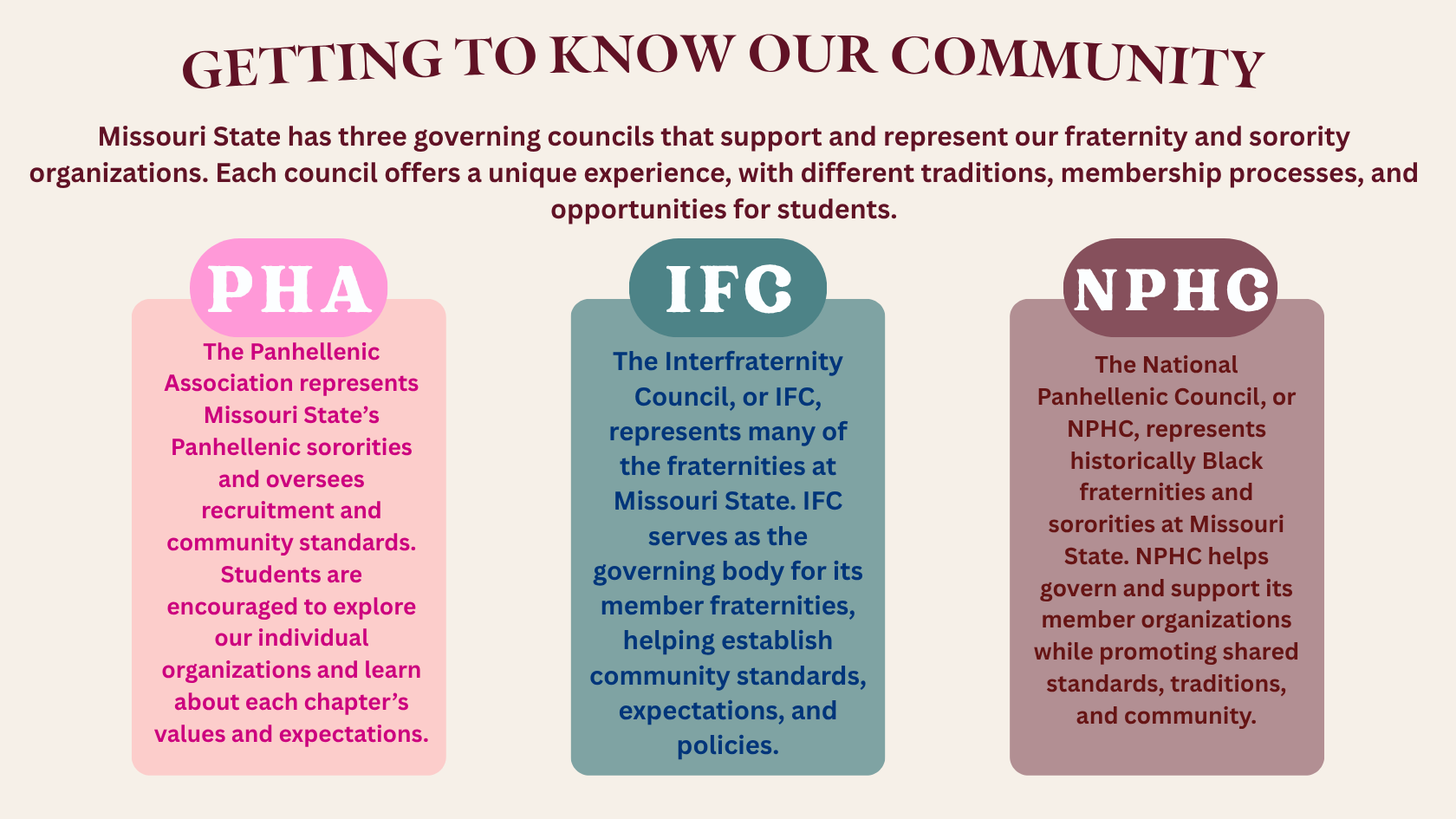
Click here to learn more about PHA
Click here to learn more about IFC
Click here to learn more about NPHC
What Families Should Know
Support Your Student
Ask Questions. Stay Curious. Let Your Student Lead.
Choosing whether to join a fraternity or sorority and deciding which organization is the right fit is an important personal decision.
Families and supporters can play a valuable role by helping students think through their options while allowing them to take ownership of their experience.
Consider asking your student questions such as:
- What interests you about this organization?
- What values does the organization represent?
- What are the financial expectations?
- What is the time commitment?
- What are the academic expectations?
- What does the new-member experience include?
- What leadership, service and professional-development opportunities are available?
- Who would you talk to if you had a concern?
The goal is not to choose an organization for your student, but to help them make a thoughtful and informed decision.
Community Standards
The well-being of students is an important part of the fraternity and sorority experience at Missouri State. Students are expected to follow university policies, organizational expectations and applicable laws. Fraternity and Sorority Life also works with campus and community partners to provide education, prevention resources and support.
Anti- Hazing Statement
At Missouri State, hazing has no place in the fraternity and sorority experience. We are committed to creating a community where students can build meaningful connections, develop leadership skills, and feel welcomed and respected—without fear of hazing or harmful behavior.
We take concerns about hazing seriously and work with students, chapters, and campus partners to promote education, prevention, and accountability. As a parent, you can expect us to prioritize your student’s safety, well-being, and positive experience.
For more information regarding the University Hazing Prevention and Programming Click Here
P.E.A.C.E. Program
The PEACE Program is a partnership between Springfield Police Department, Missouri State University, and the Office of Student Engagement that helps students better understand local laws and build positive relationships with law enforcement.
For parents, PEACE provides reassurance that students are receiving education and resources to make informed, responsible decisions and navigate their community confidently. Click here to learn more
If You Have a Concern
We’re Here to Help
Families and supporters are encouraged to reach out when they have questions or concerns about the fraternity and sorority experience.
Whenever possible, encourage your student to connect directly with Fraternity and Sorority Life staff. Helping students communicate, ask questions and advocate for themselves is an important part of their college experience.
Families may also contact the university to share concerns or ask about available resources.
Please keep in mind that federal student privacy requirements may limit the information university staff can share about an individual student or situation.
Contact FSL.
Office of Student Engagement – Fraternity & Sorority Life
Plaster Student Union, Room 127
417-836-4386