
2026 Award Winners
The winners of the Teaching Excellence award receive a $1000 payrol stipend. The winners
will be recognized for achieving the distinction for their exceptional teaching at
the annual all faculty recognition.
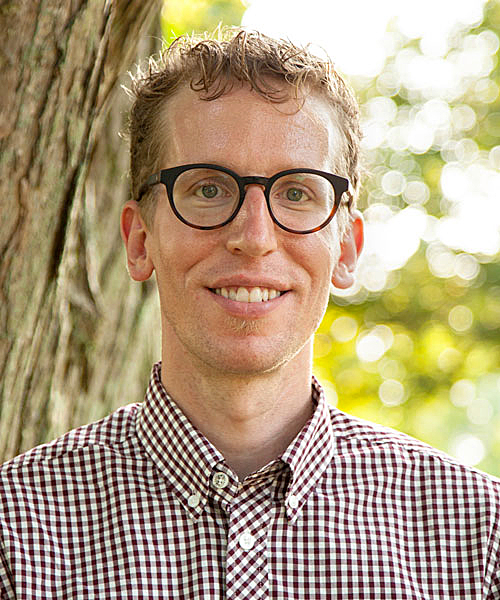
2026 Winner
Dr. Benjamin Beranek, College of Business
Finance, Economics and Risk ManagementHighlighted Teaching Approaches and Practices:
- Experiential Learning
- Community Partnerships
- Active Learning (Research and Case Studies)
- Read, Recall, Review Assignments
- Predictable Structure through Learning Mangagment System
- Reflective Practice and Continuous Improvement
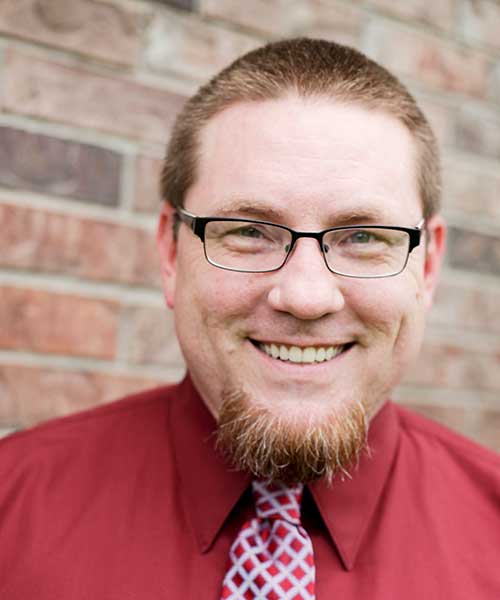
2026 Winner
Michael Foster, RCASH
Theatre and Dance - School of the ArtsHighlighted Teaching Approaches and Practices:
- Community Building
- Active Learning (Hands-On Projects)
- Learning-Work Skill Alignment
- Universal Design for Learning
- Reflective Discussions
- Empathy and Civic Development
2026 Winner
Dr. Holly Holladay, RCASH
Communication, Media, Journalism and FilmHighlighted Teaching Approaches and Practices:
- Discussion-Based Learning
- Students as Collaborators
- Active Learning (Research and Projects)
- Ungrading
- Authentic Assessment
- Student Self-Reflection
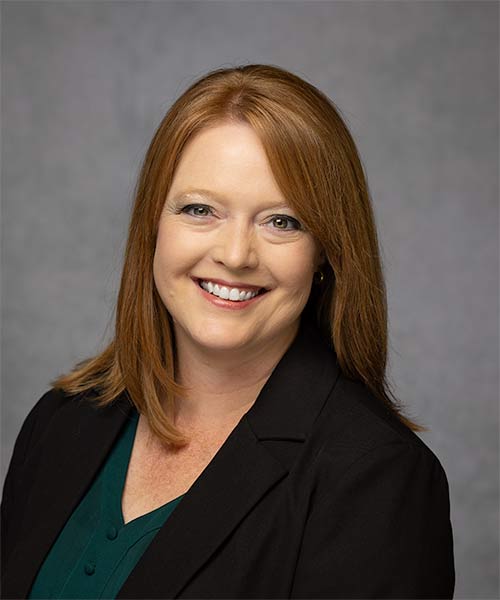
2026 Winner
Dr. Sarah Murray, MCHHS
Nutrition and Dietetics - School of Health SciencesHighlighted Teaching Approaches and Practices:
- AI-Integration into Classroom Activities
- Service-Learning
- Project-Based Learning
- AI-Supported Online Discussion (Packback)
- Formative Assessment Strategies
- Experiential Learning through Education Abroad
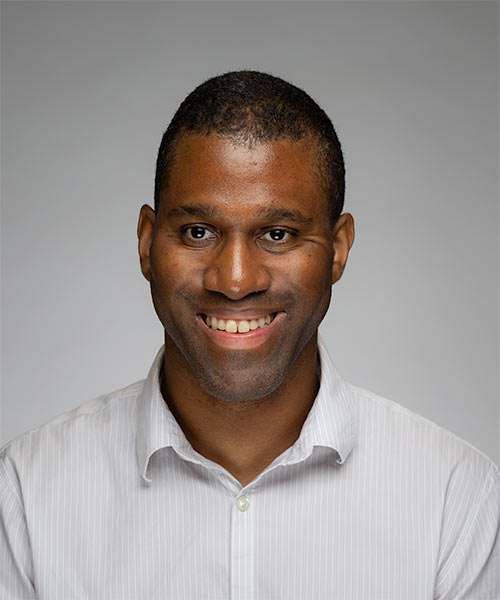
2026 Winner
Dr. Keith McShan, MCHHS
Kinesiology - School of Health SciencesHighlighted Teaching Approaches and Practices:
- Building Community
- Encouraging Intellectual Curiosity
- Active Learning (Student Collaboration)
- Growth Mindset
- Sense of Belonging
- Reflective Practice and Continuous Improvement
Previous Award Recipients
-
2025 Winner
Dr. Sarah Jean Baker, College of Education
"Teaching is inherently intellectual, requiring deep knowledge of content, pedagogy,
and the learners we serve" - Dr. Sarah Jean Baker
Highlighted Teaching Approaches and Practices
- Building Classroom Community and Culture
- Inquiry-Based Methods
- Active Learning (Collaborative and Hands-On Projects)
- Engagement through Curiosity and Critical Thinking
- Feedback
- Reflective Practice and Continuous Improvement
- Equity-Based Practices
2025 Finalist
Dr. Amy Artman, RCASH
Highlighted Teaching Approaches and Practices
- Trauma-Based Teaching
- Restorative Grading
2025 Finalist
Katy Jessee, College of Business
Highlighted Teaching Approaches and Practices
- Authentic, real-world problem- and project- based learning
- Collaborative Teamwork
- Engagement through Curiosity and Critical Thinking
- Making Connections to Sustainability
2025 Finalist
Dr. Ginney Norton, College of Education
Highlighted Teaching Approaches and Practices
- Experiential Learning
- Choice-Based Assignments
- Student Self-Assessment and Goal Setting
- Role-playing
- Disussion
- Scaffolded Assignments
- Formative Assessment
- Feedback
2025 Finalist
Dr. Alicia Walker, RCASH
Highlighted Teaching Approaches and Practices
- Hands-on Activities
- Group Projects
- Multimedia Assignments
- Designing Connected and Authentic Instruction
- Reflecting On and For Practice
- Continuous Improvement
-
2024 Award Winner
Teaching, Learning and Developmental Sciences
Dr. Bolyard focuses her practice on helping students “embrace equity-centered, trauma-informed
practices.” She is an expert in teaching, which is evident in her use of best practices
for teaching, such as the use of clear learning goals paired with research-based strategies
and formative assessment of, for, and as learning.
Dr. Bolyard implements strategies to promote high levels of teacher-student and student-student
interactions, creates inclusive content, and uses data to make decisions to meet student
needs.
Dr. Bolyard plans to continue to grow her teaching practice by “providing more meaningful
feedback”, “increas[ing] the use of modeled UDL practices”, and “mak[ing] equitable
teaching practices explicit”.
2024 Award Winner
Biology
Dr. Kovacs is committed to student success and works to “create an innovative and
inclusive learning environment.” He is a highly reflective practitioner and engages
in teaching as inquiry where he experiments with various strategies, tests different
modalities, and uses data to evaluate the effectiveness of instructional practices.
Dr. Kovacs uses findings from his inquiries into teaching and learning to modify practice
in order to meet individual students’ needs, and he has found success using strategies
such as: a) activating prior knowledge, b) integrating diverse perspectives into content,
c) discussion, and e) the use of humor to engage students in complex content.
2024 Award Winner
Criminology
Dr. LaPrade strives to help all of her students “feel emboldened and ignited” when
they leave her classroom. She implements experiential learning strategies to engage
students in real-world, hands-on, and authentic learning tasks coupled with designing
assignments to provide students a ‘sense of audience’ with students presenting their
work to real organizations within the field and involving students through peer assessment
practices. She invites students into learning through her use of clear expectations,
personal relevance, and inclusive assignments. Dr. LaPrade seeks on-going student
feedback throughout the semester and uses the data to adapt her courses to meet student
needs. Dr. LaPrade is working to incorporate active learning into the online environment
and aspires to “spark[ing] more flames for learning.”
2024 Award Winner
Criminology
Dr. Sandel is recognized as a faculty member who “goes above and beyond” for students.
He strives to provide an individualized learning experience for all students, and
has found success implementing effective feedback where students are given ongoing
information about their own learning. He also uses feedback from students to adapt
his teaching practice. Dr. Sandel differentiates materials and formats for his students
in order to provide personalized learning and to ensure accessibility for all students.
2024 Finalists
- Liza Cobos, Hospitality and Agriculture
- Todd Daniel, Information Technology and Cybersecurity
- Traci Garrison, Occupational Therapy
- Judith Martinez, Languages, Cultures and Religions
- Katrina Mitchell, Music
- Kerri Tassin, Accounting
- Alicia Walker, Sociology and Anthropology
-
Engaging Students in Online Communities
Dr. Jessica Elliott
Assistant Professor
History
Every student, whether they are enrolled in seated or online courses, should be able
to take classess that are accessible, challenging, and meaningful. - Dr. Jessica Elliott
Dr. Elliott creates engaged communities within fully online courses utilizing asynchronous
and synchrounous instructional delivery methods, research-based instructional practices,
and the integration of technology tools to "expand access to meaningful higher education"
(Elliott, J.). Dr. Elliott has noted more meaingful and consistent engagement with
the use of online collaborative annotation tools "even when compared to in-class discussions
in seated classes" (Elliott, J.).
Dr. Elliott has "high expectations but explains in detail exactly what she wants from
us and how we can do it, so she really sets you up for success and growth" (student)
Providing real life applications students can relate to and use.
Dr. Timothy Flannery
Associate Professor
Economics
I motivate students with my own passion for the subject and love seeing them develop
an interest in the topic. - Dr. Timothy Flannery
Dr. Flannery is an expert in Game Theory, Behavioral Economics, and Behavioral Economics
and Public Policy and engages in ongoing discipline-specific professional learning
from leading researchers in the field of economics in order to provide students access
to the most current theories and practices within the field. Students learn economic
theory and complex concepts through game-based instruction and in-class experiments.
Dr. William Harwood
Assistant Professor
Philosphy
Dr. Harwood is an Assistant Professor of Philosophy, and he strives to help students
be informed citizens and engaged scholars by creating a safe environment in which
all students can discuss difficult issues. Dr. Harwood believes growing up in the
deep South has been an asset to his role as an educator because his background is
closer to the average MSU student than most professors. Comments from students are
a testament to this belief; “this course gave me plenty of tools to fight for justice
[and] what I believe is good.” – [this class] helped me to discover so much about
the world and myself.” – Dr. Harwood has certainly encouraged engaged scholars when
one student said they reached “a place of respect for the philosophies we studied
and find the beauty in each. I think I will probably delve deeper into each at different
points in my life. Which is definitely a surprise for me.”
Engaging in humanizing, relevant, and relation-centered pedagogy.
Dr. Amber Howard
Clinical Instructor
School of Teaching, Learning and Developmental Sciences
Relationshps should be the center of every classrom and teaching experience. - Dr.
Amber Howard.
Dr. Howard utilizes student-centered approaches by engaging in humanizing, relevant,
and relation-centered pedagogical practices, such as developing equitable, inclusive,
and trauma-informed course policies, modeling best practices, and focusing on building
relationships with students. Dr. Howard's students note her care for students, passion
for teaching, ability to connect with students, and the creation of "a welcoming and
safe environment for every individual to feel confident enough to be vulnerable" (student).
Making learning accessible, affordable, and student-focused.
Dr. Scott Worman
Associate Professor
Sociology and Anthropology
Whatever the students go on to do, I want them to carry with them an understanding
of and respect for human diversity around the globe and through time. - Dr. Scott
Worman
Dr. Worman strives to make course materials relevant, available, and affordable. When
textbook costs exceeded $125, Dr. Worman made the decision to teach textbook-free
using a series of shorter readings, relevant web resources, and videos. He has also
transformed student research projects in his upperclassman courses to make fieldwork
more accessible to students. He partnered with colleagues to provide local historical
archaeology field experiences dropping costs to one-tenth of what a national field
school experience would cost. Dr. Worman has supervised dozens of student internships
with organizations like the Springfield History Museum, the Center for Archaeological
Research, and the Mark Twain National Forest. He also advises student research projects,
many of them being published in the Missouri Archaeological Society Quarterly, Logos,
and conference presentations.
Excellence in Teaching Award Nominees
- Subhasree Basu Roy, PhD, Associate Professor, Economics
- Rohit Dua, PhD, Assistant Teaching Professor, Cooperative Engineering Program
- James Keaton, DNAP, Clinical Assistant Professor, School of Anesthesia
- Jeremy Neely, PhD, Assistant Professor, History
- Steven Senger, PhD, Associate Professor, Math
- Dr. Vanessa Rodriguez, Associate Professor, World Languages and Culture
- Randi Ulbricht, PhD, Assistant Professor, Biomedical Sciences
- Alicia Walker, PhD, Associate Professor, Sociology and Anthropology