
Foundation Award for Teaching
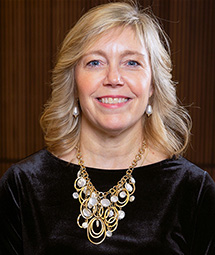
Dr. Tara Boehne
Occupational Therapy (School of Healthcare Professions)
McQueary College of Health and Human Services
I. Philosophy of Teaching
My teaching philosophy centers on reaching each student where they are, with a strong emphasis on empathy, counterbalanced with high professionalism expectations. My years spent as the AFWC required me to always look through a lens of professionalism and consider the outward impressions our students would make on their fieldwork sites. I foster a learner-centered approach, striving to have all students engaged and participating in active learning whenever possible. The goal of learner-centered teaching is to develop students as autonomous, self-directed, and self-regulating learners. I consider my courses a time and place for students to develop the learning skills on which self-confidence rests through both classroom and experiential learning. Additionally, the evaluation process is an effective setting for promoting learning and developing self- and peer-assessment skills.
The concept of learner-centered teaching involves several main ideas. It is teaching that engages students in the hard, messy work of learning (Weimer, 2013). It motivates and empowers students by giving them some control over the learning process. This teaching method encourages collaboration by creating a classroom community where everyone shares in the learning process. This approach promotes students’ reflection on what they are learning and how they are learning, which are critical components of deeper learning.
My approach to teaching requires students to interact actively with the content rather than passively receive it, connecting the new material to what they already know (Svinicki & McKeachie, 2014). As an instructor, I strive to focus on specific actions I can take to promote, advance, and increase the likelihood that students will undergo transformative learning experiences that lead to lifelong learning.
II. Examples of Courses/Topics
I took on the role of Doctoral Capstone Coordinator (DCC) in the Fall of 2023, upon the launch of the Post Professional Doctor of Occupational Therapy (PP-OTD) Program. I developed the Doctoral Capstone Project and Experience process for the PP-OTD and Entry-Level Doctorate (EL-OTD) programs, which includes a three-course series: OTE 880 Doctoral Capstone I: Project Planning, OTE 881 Doctoral Capstone II: Project Proposal, and OTE 980 Doctoral Capstone III: Experience and Project. I have taught OTE 880 and 881 and am currently teaching OTE 980. One of the challenges I have encountered is creating a part-time option for PP-OTD students taking the OTE 980 courses as they complete this course over two semesters. I piloted the first part-time offering of OTE 980 during the fall ‘26 semester, and our first two PP-OTD students will graduate in May 2026! The Capstone process also requires extensive collaboration between me and the faculty members who serve as Faculty Capstone Advisors for the students’ projects and experiences. I have spent considerable time over the past two years writing a Capstone Project and Experience Manual for this process.
III. Future Projects
I continue to refine the Capstone Project and Experience Manual and courses, in anticipation of our first cohort of Entry-Level Doctor of Occupational Therapy (EL-OTD) students beginning the three-course series in the fall of 2026, with a projected graduation date of December 2027. I am also creating a Doctor of Occupational Therapy Research Day to be held in the Fall of 2027, when our EL-OTD students will disseminate their Capstone projects. We will be showcasing our newest PP-OTD graduates’ (May 2026) Capstone projects on our Program website soon.
IV. Topics related to teaching and of interest to the University Community, for which you are available for presentations and/or consultations (e.g., presentation tools, special topics, technology, public affairs).
- Program development and aligning accreditation standards with course content and learning activities/assessments
- Online teaching methods related to doctoral coursework
- Capstone Projects and Experiences at the doctoral level