
Speaker Biographies
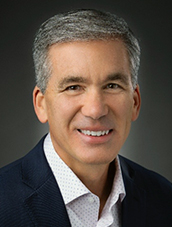
Wayne Thomas
Professor at University of Oklahoma and David C. Steed Chair in Accounting
Wayne Thomas serves as the David C. Steed Chair in Accounting and George Lynn Cross Research Professor at the University of Oklahoma. His research interests include accounting information in capital markets, techniques used by managers to manipulate earnings, the importance of financial disclosures, consequences of accounting standards, and financial statement analysis. His articles have been published in The Accounting Review, Journal of Accounting Research, Journal of Accounting and Economics, Contemporary Accounting Research, Review of Accounting Studies, and several other journals. He has served in editorship roles at The Accounting Review, Accounting Horizons, and Journal of International Accounting Research.
His teaching interests include financial and intermediate accounting. He has won teaching awards at the department, college, university, state, and national levels, including being named Outstanding Accounting Educator by the Oklahoma Society of CPAs and receiving the Cook Prize from the American Accounting Association for undergraduate teaching excellence. He currently co-authors three books with McGraw-Hill: Financial Accounting, Financial Accounting for Managers, and Intermediate Accounting. A fourth book, Managerial Accounting, is scheduled to be published in Fall 2026.
Most of all, he enjoys spending time with his wife Julee, their four children, and their three grandchildren (with another granddaughter expected in April).
Bridging the Gap: Teaching for Tomorrow’s Accounting Careers
Today’s students enter our classrooms with different expectations, experiences, and attention patterns than ever before. As educators, we can adapt our teaching to help bridge the gap between academic learning and the skills employers now demand.
Learning Objectives:
- Practical strategies to engage and motivate students.
- Discussion of how to equip students with the content knowledge, analytical abilities, and technical expertise they’ll need for success in their business and accounting careers.
- How to integrate AI tools to foster curiosity and efficiency, use data analytics to develop critical thinking, and incorporate real-world cases to connect classroom concepts to relevant professional practice.
We want to build a course that engages students and attracts the best students to the major, while ensuring that all students understand the role of accounting in decision-making, its dynamic nature, and its purpose in our society.

Cathy Scott
Associate Professor at University of North Texas
Cathy Scott is the Inaugural Director of the Center for Innovation in Teaching and Learning, and an Associate Professor of Accounting at the University of North Texas at Dallas. She is passionate about enhancing accounting education and fostering an inclusive learning environment.
Dr. Scott has published and presented extensively on topics such as emerging technologies (including AI), the effective use of technology in education, improving online learning, active learning strategies, data analytics, neurodiversity, and strengthening the accounting education pipeline. She is also the author of two college accounting textbooks and co-founder of TeachingAndLearningToolbox.com, a website and blog dedicated to connecting technology with pedagogy.
Additionally, Dr. Scott’s contributions to innovative teaching and research have been recognized with multiple local, state, and national awards, including the American Accounting Association (AAA)/EY Foundation Innovation in Education Award, the Bea Sanders/AICPA Teaching Innovation Award, and the AAA/J. Michael and Mary Anne Cook/Deloitte Foundation Prize.
Reimagining Teaching in the Age of AI: Engagement and Efficiency Redefined (Co-presenting with Markus Ahrens)
Discover practical, forward-looking ways to use AI to strengthen teaching and streamline your workflow. This session explores how AI can tailor learning experiences, deepen student engagement, and reduce routine tasks that drain time. You’ll see demonstrations and concrete examples that support diverse learners, promote higher-order thinking, and elevate course design.
Learning Objectives:
By the end, you will be able to (1) identify practical AI applications that enhance instructional efficiency and reduce administrative workload, and (2) you’ll develop an actionable plan to incorporate at least one AI tool into your teaching or daily workflow.
Whether you’re new to AI or already comfortable with it, you’ll leave with clear, immediately usable strategies and resources to continue exploring.
 Markus Ahrens
Senior Director of American Accounting Association
Markus Ahrens, PhD, CPA, CGMA, FMAA is the Senior Director of the Global Center for Advancing Accounting Education at the American Accounting Association (AAA). Prior to this role, he was a Professor of Accounting and Finance and served as District Department Chair for the Accounting, Business & Economics Department at St. Louis Community College. He also brings professional experience from the accounting and finance industries. Markus is a licensed Certified Public Accountant, Chartered Global Management Accountant, and a Financial and Managerial Accounting Associate.
Markus has received numerous national and state awards for his teaching and innovation, including the 2025 Faculty Lecture Award at St. Louis Community College. He was honored with the 2019 Innovation in Accounting Education Award from the AAA and EY, and the prestigious 2016 AAA/J. Michael and Mary Anne Cook/Deloitte Foundation Prize, which is the foremost recognition of an individual who consistently demonstrates the attributes of a superior teacher in the discipline of accounting. Markus has also received the AICPA Bea Sanders Innovation Award (2018, 2013) for teaching introductory accounting courses, the 2018 Missouri Society of CPAs Outstanding Educator of the Year Award, and the 2017 Educator of the Year Award from the AAA’s TYC Section.
Reimagining Teaching in the Age of AI: Engagement and Efficiency Redefined (co-presenting with Cathy Scott)
Discover practical, forward-looking ways to use AI to strengthen teaching and streamline your workflow. This session explores how AI can tailor learning experiences, deepen student engagement, and reduce routine tasks that drain time. You’ll see demonstrations and concrete examples that support diverse learners, promote higher-order thinking, and elevate course design.
Learning Objectives:
By the end, you will be able to (1) identify practical AI applications that enhance instructional efficiency and reduce administrative workload, and (2) you’ll develop an actionable plan to incorporate at least one AI tool into your teaching or daily workflow.
Whether you’re new to AI or already comfortable with it, you’ll leave with clear, immediately usable strategies and resources to continue exploring.
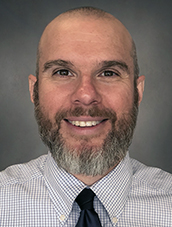 Andrew Grow
Managing Director with the Texas Society of CPAs
Andrew is a Managing Director with the Texas Society of CPAs (TXCPA). He provides executive leadership, oversight, and strategic guidance to AcctoFi, a wholly owned nonprofit subsidiary of TXCPA. This role is responsible for advancing AcctoFi’ s mission to deliver high-quality education and professional development for accounting and finance professionals, strengthen the talent pipeline into the CPA profession, and secure funding to support educational and workforce development initiatives.
Prior to joining the TXCPA, Andrew worked for the AICPA and Missouri Society of CPAs meeting regularly with firms, businesses, and educational institutions to speak with firm partners; corporate accounting and finance leaders; and university professors about high-profile profession issues.
He holds bachelor and master degrees in English Literature; is a graduate of University of Missouri, Columbia and University of Missouri St. Louis; and holds a Certified Association Executive credential.
Tilting Scales of Alternate Pathways to CPA Licensure
We are a profession in flux, caught between structures and systems set up for (mostly) universal CPA licensure pathways to a new alternate CPA licensure pathway. By March, 2026 there will be 22 jurisdictions with active new CPA licensure pathways, and another 24 in-process. This discussion will:
- Update live status of jurisdictional filings/passings of bachelors degree + 2 years of experience CPA licensure pathway
- Outline Missouri legislative action as a case study
- Link legislative activity to anti-regulation profession threats
- Discuss practical implications and considerations for both licensure and mobility
- Identify CPA firm and company sentiments during transitionary period
Stay engaged in current profession legislative activity in this space to help you, your colleagues, and department best navigate practical implications for your curriculum and students.

Dr. Gail Hoover King
Retired Accounting Professor
2025 AAA Outstanding Educator of the Year
Gail Hoover King is a retired Professor of Accounting and Data Analytics with a distinguished career in academic leadership, curriculum innovation, and teaching excellence. She served as Associate Dean and Discipline Chair at Rockhurst University, Division Chair at Purdue University Northwest, and directed the development of the Business Data Analytics program at Washburn University. Dr. King earned her bachelor’s and master’s degrees from the University of Kansas and her doctorate from the University of Northern Illinois College of Business.
Her research focuses on learning, assessment, and curriculum development, for which she has received numerous recognitions, including the American Accounting Association’s (AAA) Outstanding Accounting Educators Award, the Jim Bulloch Award for Innovations in Management Accounting Education, the Mark Chain Innovation in Graduate Teaching Award, and honorable mention for the Bea Sanders Undergraduate Teaching Award. She also received the AAA Outstanding Service Award and the Hall of Honors Award from the Teaching, Learning and Curriculum Section.
Dr. King served as a Commissioner for the Pathways Commission and has held extensive leadership and service roles on AAA boards, committees, and conference teams. Her professional background includes experience in financial and cost accounting, as well as consulting.
Teaching With Purpose and Impact
Teaching extends far beyond helping students master course content; its true purpose is to cultivate learners who know how to learn, think critically, and transfer their knowledge to new and evolving situations. In this session, the presenter will share practical strategies for achieving these goals across a wide range of learners—from novice undergraduates encountering accounting concepts for the first time to graduate students bringing real-world work experience into the classroom.
Drawing from decades of teaching and leadership experience, she will highlight some of her most impactful instructional materials, assignments, and classroom approaches designed to promote deeper engagement, reflection, and application. The session will also explore how she would adapt these strategies to address today’s changing learning environment. Participants will leave with ideas they can apply to enhance student learning and motivation in their own courses.
 Greg Mehalovitz
Enterprise Account Manager – McGraw Hill
Greg Mehalovitz is an experienced educator and dedicated advocate for accessible, high-quality education. With over seven years of teaching experience in K-12 classrooms across multiple countries, Greg brings a global perspective to his work. He holds a master’s degree in education and has spent the past four years at McGraw Hill, where he combines his passion for learning with innovative solutions to empower students and educators alike.
Currently based in Centennial, Colorado, Greg serves as an Enterprise Account Manager at McGraw Hill. In this role, he collaborates with instructors and institutions to implement cutting-edge tools like Sharpen Advantage, an AI-powered student success platform. Greg partners with organizations to align McGraw Hill’s solutions with their strategic goals, ensuring measurable outcomes that drive institutional success. His work reflects his core belief in McGraw Hill’s mission of “Education For All,” helping to create meaningful, impactful learning experiences for students everywhere.
Sharpen Advantage: Empowering Students and Institutions Through AI-Driven Learning Solutions
This session will explore how Sharpen, a trusted AI-powered study app, is transforming education by providing personalized learning resources, real-time performance insights, and tools to close knowledge gaps. We’ll also examine how Sharpen supports institutions in scaling AI effectively and drives measurable academic impact, including improved retention rates and student outcomes.
Learning Objectives:
- Understand how Sharpen Advantage enhances student learning through personalized, AI-driven support and curated resources.
- Explore the role of real-time performance insights in identifying knowledge gaps and enabling early intervention.
- Discover strategies for leveraging Sharpen to boost retention rates and deliver measurable academic success
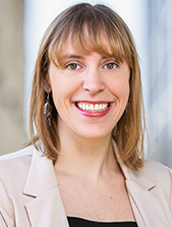 Elaine Jolly
Applied Assistant Professor at University of Tulsa
Elaine Jolly, CPA, is a graduate of The University of Tulsa, MAcc., 2014. She has extensive public accounting experience in both audit and tax departments of a regional accounting firm. She has taught accounting since 2016 and is currently teaching financial accounting, managerial accounting, intermediate accounting, and accounting ethics.
Evidence Based Student Engagement Strategies
This session explores evidence-based student engagement strategies that can be effectively integrated into accounting courses to enhance participation and deepen student learning. Participants will examine practical approaches grounded in educational research and discuss how these strategies can be adapted for a variety of accounting topics and classroom settings. The session will also highlight simple, actionable feedback and assessment techniques that instructors can use to evaluate student involvement and comprehension.
Attendees will leave with concrete tools to assess the impact of engagement efforts and make informed adjustments to improve learning outcomes in their courses.
Learning Objectives:
Identify evidence-based student engagement strategies that can be applied in accounting courses to increase participation and improve learning outcomes.
Evaluate the effectiveness of different engagement approaches by using simple feedback and assessment methods to measure student involvement and comprehension.
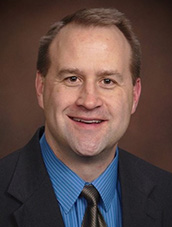
David Krug
Professor at Johnson County Community College
A full-time instructor at Johnson County Community College in Overland Park, KS since 2004, David enjoys engaging with students and figuring out new ways to make the subject of accounting more interesting and fun. David began his career as a CPA in a public accounting firm and has also owned and operated a variety of businesses. He has a passion for student mental and emotional health, and in creating ways to get students to put down their phones and communicate deeply with each other. David is currently finalizing his book entitled Easy, Dave: A College Professor’s Guide to Anxiety, Growth, and Being Human.
International students are another focus for David, as he acts as an adviser to the JCCC International Student Club. Currently he has created hundreds of videos available publicly on YouTube to students worldwide. David is a keyboardist/harmonicist who has played in a blues band since 2007. He lives in Overland Park, KS with his wife of 35 years. They have two adult sons and three cats named Kramer, George and Newman.
Integrating Mental Health Awareness into Accounting Instruction
Accounting students are struggling—and our classrooms are showing it. Anxiety, depression, and social isolation are at historic highs among young adults, yet few instructors feel equipped to address these challenges. During my sabbatical, I developed practical materials to help students navigate mental health topics: managing anxiety, improving time management, building social connections, recognizing when to seek help, reframing negative thoughts, practicing mindfulness, and fostering positive self-talk. In this session, I will share actionable strategies for integrating mental health awareness into accounting instruction.
Attendees will learn how to support students’ well-being, enhance engagement, and prepare them not just for exams, but for the personal and professional challenges of the accounting profession. As accounting educators, we have a unique opportunity—and responsibility—to cultivate resilience and holistic growth in the next generation of professionals.
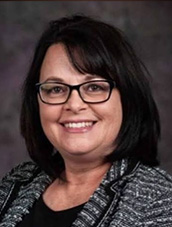 Stacey Lhuillier
Ethics Instructor at Kansas State University
Stacey Lhuillier serves as Senior Management Faculty in the College of Business at Kansas State University, where she instructs students in Business Ethics and Corporate Citizenship, Principles of Management, and Operations and Supply Chain Management. With over two decades of academic experience and instruction across 23 business courses, she brings a broad and insightful perspective to business education. Her recent focus centers on equipping educators to address emerging ethical challenges in today’s business environment and preparing students for principled, value-driven decision-making. Her dedication to teaching has been recognized by faculty, staff, and students through repeated nominations for several prestigious awards, including the Commerce Bank and W. T. Kemper Foundation Undergraduate Outstanding Teaching Award, the Edgerley Instructor Fellowship, and the Kansas State Bank Teaching Excellence Award. Before entering academia, she was a licensed Financial Planner, working closely with businesses to address their financial needs. This role offered her firsthand insight into both ethical and unethical business practices, shaping her ongoing commitment to ethics education. Drawing on her industry experience in financial planning, she now serves as a faculty consultant for Kansas State University’s financial literacy initiative, where she contributes to university-wide curriculum and program development. Her work across teaching, consulting, and curriculum design reflects a deep commitment to academic collaboration, ethical leadership, and the development of future business professionals.
Integrating Ethical Competencies: Preparing Future-Ready Accounting Professionals
This presentation equips educators to facilitate experiential, applied learning that reflects the ethical and technological challenges faced by today’s accounting professionals. Participants will engage with real-world scenarios involving data-driven decision-making, technology governance, ethical AI use, and auditing applications, including fraud triangle examples supported by case studies and teaching notes.
The session emphasizes integrating ethical technology competencies to prepare accounting professionals and CPAs within the competency framework for:
- Data-driven ethical decision-making
- Ethical technology implementation and governance
- Ethical considerations in automated, AI-enabled environments
Participants will critically examine profession-relevant cases that demonstrate how technology influences judgment, assurance, governance, and ethical evaluation, including how fraud risks emerge across pressure, opportunity, and rationalization. Through guided discussion and teaching notes, educators will explore the balance between human oversight and technological capabilities. The session concludes with small-group collaboration to identify educator concerns and share strategies for integrating ethical technology competencies into accounting curricula.
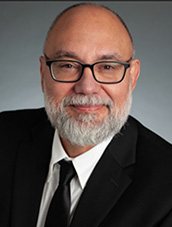
Jose Lineros
Clinical Assistant Professor at the University of North Texas
Dr. Jose Lineros is a Clinical Assistant Professor in the Department of Accounting at the University of North Texas (UNT), where he specializes in IT Audit, Advanced Data Analytics, and AI technologies. With a strong academic and professional background, he brings a wealth of expertise in accounting technology, data-driven auditing techniques, and the integration of AI in financial oversight.
He holds a PhD in Educational Psychology, an MS in Telecommunications, and a BBA in Accounting, providing him with a unique interdisciplinary perspective that combines technical proficiency, business acumen, and expertise in learning methodologies. His ability to bridge the gap between theory and practice allows him to equip students with industry-relevant skills in Excel automation, VBA, Python, and data analytics for audit and compliance.
As an ISACA executive board member, Dr. Lineros frequently conducts professional training, workshops, and educational sessions related to AI, IT auditing, and data analytics. He has published in the Journal of Emerging Technology in Accounting, Community College Journal of Research & Practice, and other academic and IT-related journals
Psychophysiology and The Art of Detecting Deception
This presentation examines the role of psychophysiology in detecting deception during audit and investigative interviews. Auditors frequently rely on verbal responses and documentary evidence, yet research in psychophysiology suggests that deceptive behavior is often accompanied by measurable physiological and behavioral cues. Drawing from interdisciplinary research in psychology, neuroscience, and forensic interviewing, this session explores how stress responses, cognitive load, and autonomic nervous system activation may manifest during deceptive communication.
The presentation emphasizes practical application rather than pseudoscientific “lie detection” techniques. Attendees will learn how physiological indicators—such as changes in speech patterns, response latency, micro-behaviors, and stress-related reactions—can inform professional judgment.
Learning Objectives:
- Explain the psychophysiological mechanisms commonly associated with deceptive behavior during interviews.
- Identify observable behavioral and physiological cues that may signal increased cognitive load or stress in audit interviews.
- Apply psychophysiological insights ethically and appropriately to improve interview strategy without relying on definitive claims of deception.
 Graham Ryan
Partner, Assurance Services at RubinBrown
AAES 2026 Employer Panelist
Graham Ryan is a Partner in RubinBrown’s Assurance Services Group. He has more than 15 years of accounting and auditing experience. Graham works with clients in various industries with a focus on construction and employee benefit plan audit services.
Specific Experience/Expertise:
General contractors, Sub-contractor, Electrical, Mechanical, Concrete, Roofing, Plan audits, Mergers and acquisitions, Internal controls, Cash flow analysis, Benchmarking,
Education:
- Masters of Accountancy, University of Kansas
- B.S., Accounting, University of Kansas
Professional Organizations:
- Member, Surety Association of Kansas City
- Member, Missouri Society of Certified Public Accountants
- Member, American Institute of Certified Public Accountants
- Member, Construction Financial Management Association
- Member, Greater Kansas City Chamber of Commerce Centurions Leadership Program, Class of 2025
Professional Accomplishments, Awards & Publications:
- Baker Tilly International’s Oxford Leadership Program (2023)
- Secondment, Staples Rodway, Auckland, New Zealand (2015)