Imagining and Making Missouri's Future
Universities are the source of most scientific advances, scholarly discoveries, creative processes, and technological innovations, which collectively are the new lifeblood for the knowledge-based economy of the 21st century. Seeking to be a more substantial force for the scholarship of discovery and the advances derived from it, Missouri State University will expand its research ambitions, investments, and achievements. The University intends to become an institution that incubates important new ideas in several fields of endeavor through the work of first-rate faculty and intellectually engaged students.
The University will develop and emphasize three interrelated strategies to accomplish the goal of incubating new ideas:
Formed in 2005, the Task Force on Missouri State University Futures was charged with assessing the current status of the University’s scholarly and educational strengths and recommending up to 12 areas of contemporary scholarship that would be priorities for investments of new and allocated resources, particularly the allocation of new faculty lines. The Task Force identified 11 research emphasis areas, all of which are highly interdisciplinary, to be considered priorities for additional University support:
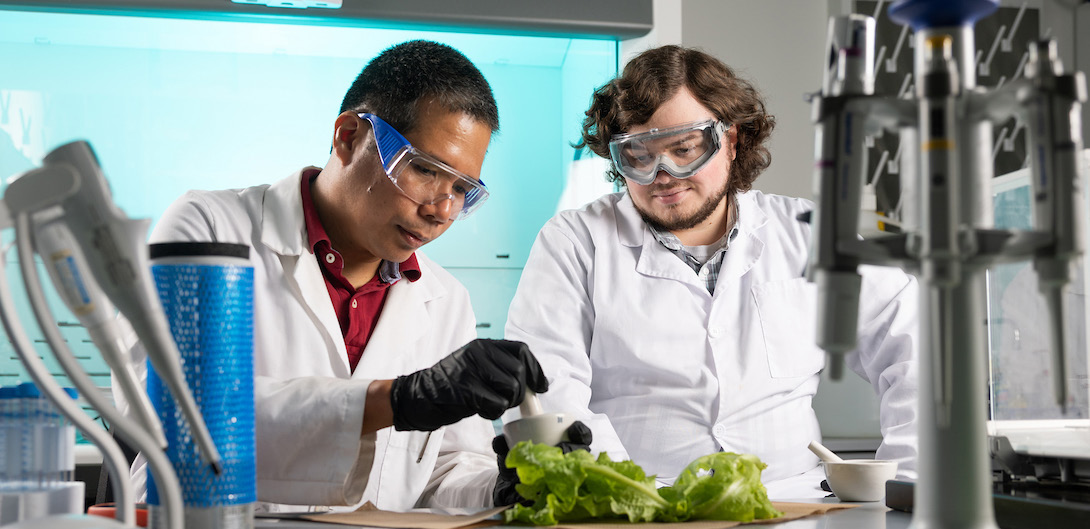
Students have opportunities to experience cutting edge research and interact with nationally recognized faculty.
To arrive at these recommendations, the Task Force assessed the strategies that other universities are designing for investment in research; established criteria for identifying emphasis areas; examined numerous internal documents and reports to determine areas of activity and strength; solicited faculty input through several means including open forums; and, solicited feedback from the community through a forum held at the Springfield Area Chamber of Commerce.
The Task Force had the difficult job of balancing a number of legitimate but competing concerns, including the balance between research and teaching. These included the issue that external funding is more readily available in some research areas than in others; the need to promote interdisciplinary research in an existing administrative structure that is not supportive of interdisciplinary research; the need to ensure that the emphasis areas are complementary to and supportive of the University’s mission in public affairs as well as the major themes promoted by the University; and the need to promote research and scholarship without diminishing the University’s strength as a teaching institution. And, of course, the background for all discussions is the continuing budget constraints faced by Missouri State University.
The 11 recommended emphasis areas are relevant to today’s environment. However, these emphasis areas are organic in nature and are subject to change. Some areas will flourish, others may not. The need to add additional emphasis areas in the future is likely. Further, activities of other committees on campus, for example the Public Health Task Force, may give rise to other emphasis areas for consideration.
Given the rapidly changing environments in which the University operates, it is essential that it adopt an organizational structure for coordination and distribution of resources in order to best develop identified research emphasis areas. In addition, it will be essential for the University to assess the impact and effectiveness of each Futures area.
This evaluation will be undertaken on a three-year cycle. Emphasis areas not meeting expectations will be eliminated for contemporary consideration as a special focus for investment. Consistent with the Task Force recommendation, a faculty committee, chaired by the Vice President for Research and Economic Development, will be appointed and be responsible for providing the on-going assessment of each area. Recommendations made by the committee will be forwarded to the Provost and President for final actions.
The University will allocate a recurring fund to support high-quality Futures initiatives. Beginning in Academic Year 2006-07, the President allocated a recurring fund of $700,000 to the Provost. These funds will be allocated by the Provost on a competitive basis in response to those proposals judged the most capable of advancing the University’s research achievements in the designated Futures areas. Subsequent presidential allocations to this fund will be considered as part of the annual Decision Package. Progress will be tracked annually with Public Scorecard measures. (See Chapter VI: Modeling Ethical and Effective Behavior for more details.)
In all of its programs, the University uses the most effective methods of discovering and imparting knowledge and the appropriate use of technology in support of these activiies.
Missouri State University understands its primary task of developing educated persons to include adding to the store of human understanding through research. Over the past decade, Missouri State has matured from primarily an undergraduate teaching institution to one more involved in graduate education. This has necessitated a greater commitment to research, not only to better serve students, but also to advantage society in general. The University recognizes its research obligations to society and is committed to encouraging and facilitating its research achievements. Herein, research is defined as:
the production and formal communication of creative scholarly works. The nature of research varies widely among different academic disciplines, but generally refers to the discovery, refinement, and synthesis of information; the application of information to the solution of problems; and artistic activity. In the context of each academic discipline, research produces creative outcomes that are formally communicated to, and vetted by, peers. Scholarship, teaching, and research are all aspects of quality education. If teaching and its related activities are defined as the learning and communication of that which was already known, research is the discovery and communication of that which was not previously known.
Research is an essential contribution by the University, and Missouri State encourages and facilitates research in both its basic and applied forms for three primary reasons:
The University has found its obligations in research broadened and deepened with the addition of a statewide public affairs mission and the development of numerous graduate programs. Consequently, Missouri State has established a number of research centers, such as the Center for Applied Science and Engineering and the Community and Social Issues Institute, to maximize its ability to conduct influential research. The recent addition of endowed professorships and chairs throughout the institution is yet another major step in the University’s broadened research mission.
Missouri State University is a community of scholars that accepts the challenge of integrating research with teaching and service in order to be proactive in our ever-changing social and technological environment. To meet this challenge, Missouri State shall assume a leadership role in the creation and transfer of knowledge.
Dr. David Meinert directs the accelerated master's degree course of study leading to a Master of Science in Computer InformationSystems (MS CIS) degree.
Research is a vital component of producing educated persons with life-long commitments to learning. Experiences in research prepare students to be competent producers and consumers of information throughout their lives, and they allow students to experience the intellectual delights of discovery.
The educational value of research is distinct from that of classroom education, where the professor typically serves as an authority presenting known material. In research, both the professor and the student are on the same side of the learning experience, facing the unknown together. The student’s unique perspective and enthusiasm can invigorate the faculty member as they work side-by-side.
Graduate and undergraduate students at Missouri State should engage in research activities as part of their educational development. Research training has become a necessary preparation for many careers. Hence, it is essential that faculty continue to conduct research with the support of the University as they guide students through this process. Regardless of the format for the research experience, all students are encouraged to disseminate their findings through local, regional, and/or national presentations, exhibitions and publications. To this end, the Graduate College provides funding on a competitive basis to support graduate student travel to conferences to present their research.
The faculty member who publishes or engages in artistic activity is optimally equipped to lead the student through the processes involved in the conduct and dissemination of research. Further, the more a faculty member disseminates research, the greater the exposure for the University, resulting in increased prestige and the recruitment of excellent students and faculty. In addition to its direct academic benefits, research also provides a source of financial support for students. For example, grants and other external funds can provide assistantships, travel funds, and resources for creative activity.
Research opportunities in emerging technologies are on the rise at Missouri State.
How can we improve research productivity at Missouri State University? How can we encourage the integration of teaching and research? How can we maintain equitable workloads among faculty and departments while making the best use of their talents and opportunities for research? Missouri State will focus on several means to achieve these goals.
Missouri State University is committed to providing the programs and scholarship that will make it a regional center for graduate education. In recent years, Missouri State has ranked as either the third or fourth largest public provider of graduate education in Missouri. The decade of the 1990s was a time of unparalleled growth in graduate education at Missouri State. The number of graduate programs, graduate enrollment, and the graduate-student percentage of total enrollment all doubled. During the implementation of the most recent long-range plan, Missouri State has continued to increase the number of programs (from 39 in 1999 to 43 in 2004), including the addition of the doctorate in Audiology, and the number of graduate students peaked at 3,270 in 2002. Attaining and maintaining the highest possible quality of these programs is now critical if Missouri State is to remain a pre-eminent provider of graduate education.
Dr. James Baumlin, professor of English and his graduate-level English seminar students researched and published the book The Gillioz 'Theatre Beautiful': Celebrating Springfield's Teatre History, 1926-2006.
The master’s degree is increasingly recognized as a valued and essential credential for a variety of careers. There also is market-driven student demand for master’s degree preparation in vocations such as teacher education, health care and other professions requiring licensure or managerial qualifications (for example, Physicians Assistant, Physical Therapy, Nurse Anesthesia, and Accountancy). The master’s degree programs at Missouri State vary in focus, including traditional academic master’s degrees, professional master’s degrees, and applied master’s degrees. A number of these degrees have a unique structure, are offered in special formats, or are programs not offered by any other public institutions in the state. These include: the M.S.–Physician Assistant Studies; M.S.–Defense and Strategic Studies (Washington, D.C. area-based); on-line M.S.–Administrative Studies; on-line/on campus blended M.S.–Computer Information Systems; Master in Natural & Applied Sciences; and the Doctorate in Audiology.
Over the next five years, Missouri State University will make those investments in graduate education that have the best potential to increase the quality and appropriate quantity its graduate programs require.
Significant progress has been made in the past 10 years to increase access for students by delivery of graduate programs and courses using technology, but more will need to be done. Societal needs in post-baccalaureate education require innovative and flexible programming along with efficient use of University resources. To answer the many needs of graduate education, the Graduate College must have resources that are flexible and can be reallocated on an annual basis. New technology and distance education initiatives from other institutions in and outside of Missouri, plus the appearance of satellite campuses from other institutions, have created a competitive environment that could threaten Missouri State’s status as the premier graduate institution in the region.
Missouri State must take steps to remain ahead of the competition. University policies must be updated to encourage strategic course delivery, scheduling, fee structure, cooperative programs, etc. In addition, more flexibility in resource use should be developed, to include the use of funds to recruit and retain the best graduate students, and the creative use of space and equipment to maximize instructional outcomes. Finally, enhanced flexibility in, and rewards for, the dedication of faculty time to graduate education is crucial.
In addition to providing graduate students with rigorous coursework and scholarly independent work, it is important to provide practical experience in the discipline. An ideal mechanism for this is with graduate assistantships. Use of graduate assistants to assist in teaching lower-division classes can be expanded. These graduate assistants receive intensive training at both the University and departmental levels and work closely with the instructor for the class. In addition, other graduate students (with appropriate backgrounds) can be used in administrative or clinical settings, thus freeing up faculty time or reducing the need for staff or per-course instructors.
Missouri State will strive for modest growth in graduate enrollment, remaining in the range of 3,000-3,500 degree-seeking and post-baccalaureate students. Maintaining high quality programs at this level of enrollment will require recognition of the workload differences inherent in graduate education and a commitment of resources to several key initiatives, including those that strengthen our research infrastructure and that improve recruitment and retention of high-quality graduate students.
The next five years will be a time of maturing, refining, and strengthening existing programs. The desirability of adding new graduate programs must be carefully balanced against providing existing graduate programs the resources necessary to achieve or maintain excellence. The University anticipates adding a small number of selected programs that will be consistent with its mission. These new programs will be in fields where both an increasing societal demand and current University expertise can be documented, and where new funds can be identified. These may include programs at the doctoral level (either cooperatively with the University of Missouri, or on our own), such as a clinical doctorate in Physical Therapy or a Ph.D. in Geography or Materials Science. Cooperative ventures with other universities, government agencies, and private corporations will be pursued where they can improve the quality or efficiency of Missouri State’s programs.
Named for the University's second president, Dr. Clyde Milton Hill, Hill Hall is home to the College of Education.
Accelerated master’s programming and specialized graduate certificate programs will be expanded over the next five years. These programs address student demand for fast-track training and market demand for greater interdisciplinary opportunities at the graduate level. In most cases, this expansion will require modifying and/or repackaging existing Missouri State classes/programs, with only minor increases in resource requirements. However, the institution will also pursue the extension of its accelerated master’s programs to local private colleges whose undergraduate population desire enrolling in Missouri State graduate courses during their senior years.
Missouri State must continue to develop innovative programs and technology that can provide educational opportunities at a distance. Interactive-television, telecourses, interactive CD-ROM and satellite locations will be strengthened so that the University will remain at the forefront of an increasingly competitive marketplace. Curricula offered via the Internet will play an important role in maintaining Missouri State’s status as a center for graduate education.
Increased globalization of graduate programs will continue (e.g., the dual-degree Plant Science program between Missouri State and China Agricultural University in Beijing). As instructional technology continues to improve, Missouri State will assume a stronger international presence. To do so, the University must expand its presence in the international marketplace and recruit from this pool of talented students.
The University must provide additional resources for recruitment and retention of outstanding graduate students. This will be accomplished through the following:
The rapid growth in graduate education over the last decade at Missouri State has put increasing demands on the faculty and staff. However, the lack of sufficient resources over this same time period has stretched existing budgets to the point where the quality of programs could be adversely impacted. To prevent these conditions from diluting the quality of graduate programs, recruiting and retaining high-quality graduate faculty is essential. This will be accomplished by providing necessary resources and a supportive campus atmosphere that facilitates and encourages scholarship in its myriad of forms.
This "supportive atmosphere" will include policy and administrative changes to ensure that requirements for productive scholarship are anticipated and that adequate time and resources are available for graduate faculty. Such resources will include:
Missouri State’s recent ascendancy in graduate education has been supported in part by increased state funds for specific new programs. However, supervision of graduate projects (thesis, degree papers, internships, clinical rotations, student teaching, etc.) is done in most cases as an uncompensated overload by faculty. Furthermore, the extent of this increased workload varies greatly between programs (thesis, non-thesis, clinical, etc.), so more flexibility among programs in how this workload is handled is required. Institutional recognition of this effort will be provided in order to recruit and retain outstanding graduate faculty. Support for the mentoring of graduate projects will be increased, thereby freeing more faculty resources to direct the scholarly activities of graduate students.
In order for the University to make and sustain the changes necessary to remain competitive in 21st century graduate education, an infrastructure must be implemented that: 1) promotes excellence in a wide variety of graduate programs; 2) allows for flexibility of graduate programming; and 3) recognizes differences between undergraduate and graduate education, despite their complementary nature. Important changes in graduate studies infrastructure will include: