Missouri State University System
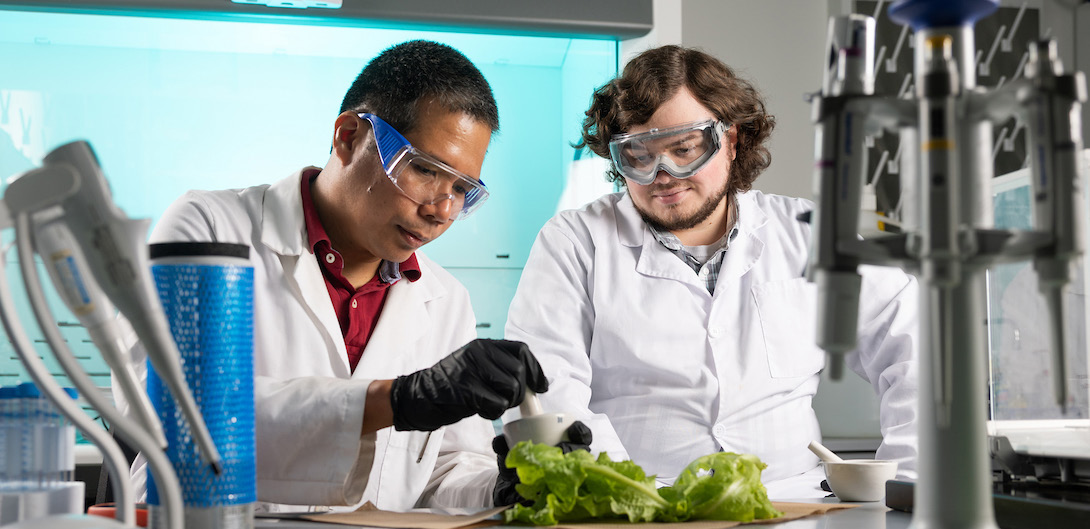
For more than 100 years, the Mountain Grove Campus -- home to the State Fruit Experiment Station -- has been the site of fruit development and research.
The Missouri State University campuses (see Chart I-A) are structured to address the special needs of the urban and rural populations they serve. Missouri State University-Springfield is a selective admissions, graduate level teaching and research institution. Missouri State University-West Plains is an open admissions campus serving seven counties in south central Missouri. Missouri State University-Mountain Grove serves Missouri’s fruit industry through operation of the State Fruit Experiment Station. The Extended Campus provides anytime, anyplace learning opportunities through telecourses, Internet-based instruction and through its interactive video network (BearNet). The University also operates various other special facilities, such as the Darr Agricultural Center in southwest Springfield, the Jordan Valley Innovation Center in downtown Springfield, the Bull Shoals Field Station near Forsyth, Baker’s Acres and Observatory near Marshfield, the Missouri State University Graduate Center in Joplin, and a branch campus at Liaoning Normal University (LNU) in Dalian, China. In addition, Missouri State has the operations and program offerings of one entire academic department, its Department of Defense and Strategic Studies, located near Washington, D.C. in Fairfax, Virginia.
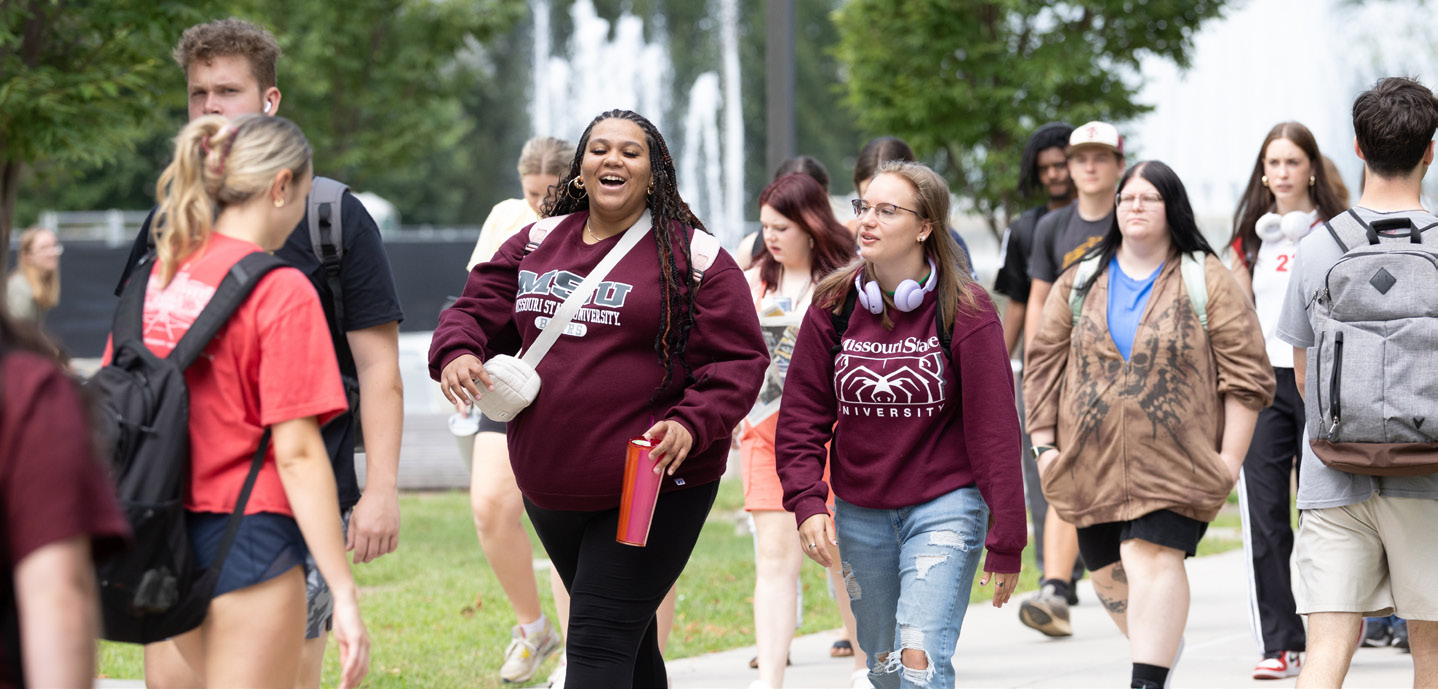
Missouri State University-Springfield campus
The Missouri State University-Springfield Campus offers a spectrum of educational programs that respond to regional and statewide needs while striving for national and international excellence. Missouri State is an intellectual and creative resource for the Springfield metropolitan area, contributing to its economic development, social health, and cultural vitality through education, research, and professional outreach. The University collaborates with many communities and clientel throughout the region in order to bridge the socio-economic, cultural, and political gaps that exist among them. Missouri State continues to shape its structures and design its policies and practices to enhance its effectiveness as a key institution for the citizens of Missouri.
The Missouri State University-Springfield Campus offers baccalaureate, master’s, specialist in education, and professional doctorate degrees, and is the host site for a cooperative doctorate degree in educational leadership with the University of Missouri-Columbia. As of 2006, the Springfield Campus offered programs through 42 academic departments organized in six academic colleges. More than 140 academic programs and options are offered at the undergraduate level, leading to nine undergraduate degrees.
Chart I-A

In the 1990s, mission enhancement funds were provided to Missouri State, enabling the institution to better serve the state’s need for a high-quality undergraduate/graduate institution. As a result, the Springfield Campus has become a major graduate education provider, offering 47 master’s degree programs and working with the University of Missouri to provide cooperative master’s and doctoral level programs. Graduate students comprise more than 16 percent of the campus’ total student population.
Even with these changes, undergraduate education remains a priority, and implementation of selective admissions standards will continue, with a sensitivity to the needs of the 24-county service area and the state of Missouri.
Missouri State University downtown
In 1996, Missouri State University and Springfield entered into an agreement to direct future University expansion away from neighborhoods, such as Phelps Grove to the south of campus, and toward the downtown area northwest of campus. That agreement, reflected in the Missouri State Master Plan Visioning Guide and the Vision 2020 Springfield-Greene County Comprehensive Plan, has resulted in the University acquiring and/or leasing increasing amounts of properties in the downtown area. The Missouri State University-Springfield Master Plan Visioning Guide has been formally adopted by the Springfield Planning and Zoning Commission and the Springfield City Council. To ensure orderly development in the downtown area, the University has added a downtown planning element to its Master Plan Visioning Guide.
The Missouri State University Foundation owns the 81,000-square-foot Kenneth E. Meyer Alumni Center and adjacent parking garage, and Missouri State owns the 62,500-square-foot Jim D. Morris Center for Continuing Education and two nearby surface parking lots. In addition, Missouri State leases approximately 60,000 square feet to support numerous programs, including the Institute for School Improvement and the Department of Art and Design.
The University will continue to invest in new and leased facilities directed by the following objectives:
- To provide outstanding educational opportunities, specifically with regard to metropolitan issues, service learning, and public affairs
- To provide affordable, high-quality space for academic and auxiliary programs
- To ensure that the University can expand as required while, at the same time, fulfilling its obligations outlined in the Phelps Grove agreement with the City of Springfield
- To stimulate the revitalization of downtown Springfield
- To fulfill the University’s metropolitan mission of contributing to the economic development, social health, and cultural vitality of the region
These objectives are based in large part on long-term partnerships with the City of Springfield, the Springfield School District, Ozarks Technical Community College, and many public and private entities that have an impact on the development of Springfield and the region.
The University will continue to assess the feasibility/desirability of locating other programs in downtown Springfield, as well as the possibility of expanding programs already located downtown. Further, the University shares the community’s vision of downtown Springfield as an arts, entertainment and education center, and Missouri State intends to be an active partner in developing and revitalizing Springfield’s center city.